
A marine bracelet is a piece of jewelry whose designs, materials, or manufacturing techniques draw from the nautical world: rope knots, anchors, shells, turtles, starfish. Worn on the wrist, it joins a long tradition of objects meant to protect or attract luck. The uniqueness of this type of jewelry lies in the dual interpretation it allows: a casual fashion accessory on one side, a personal symbol loaded with meaning on the other.
Marine Knot and Anchor: Symbols that Precede Jewelry
Before adorning wrists, marine knots were used to secure lives. Each type of knot served a specific function on board, and a sailor’s ability to execute them partly determined their survival. This technical know-how has transitioned into the symbolic: the marine knot represents a bond that withstands trials.
The anchor follows a similar path. Used since antiquity as a sign of stability by early Christians, it has retained this association over the centuries. Transposed onto a bracelet, it evokes a point of attachment, a fixed reference in a changing existence.
This transfer from the functional to the symbolic explains why these motifs resonate so much with fans of lucky charms. Giving or wearing the marine bracelet as a lucky charm amounts to appropriating a sign whose protective charge was not invented by marketing, but forged by generations of sailors.
Marine Bracelet and Stylistic Versatility: A Jewelry Piece for Every Occasion
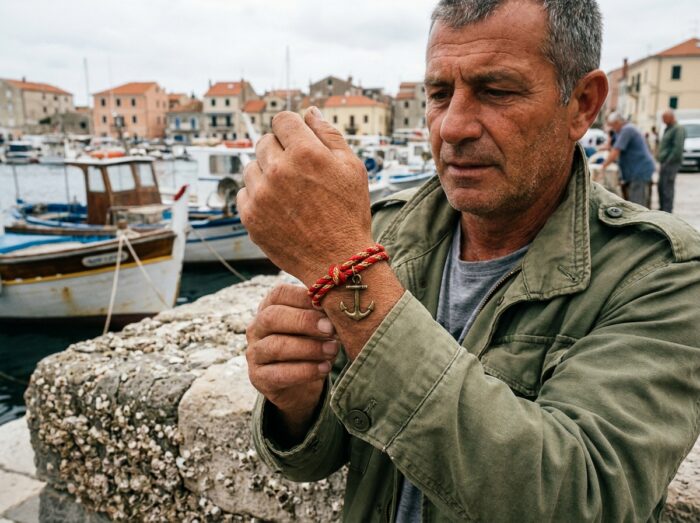
Sea-inspired motifs (starfish, turtle, shell) have an advantage rarely highlighted in symbol guides: they adapt equally well to a casual style as to a more dressed-up outfit. A four-leaf clover pendant or a nazar eye immediately directs the interpretation towards luck. The marine bracelet, however, can pass as a simple summer accessory to those who do not know its meaning.
This discretion appeals to those who cherish their luck ritual without wanting to display it. The jewelry thus fulfills two roles at once: an intimate reminder of a personal intention and a versatile accessory.
String, Beads, or Metal: The Choice of Material Alters the Register
A nylon cord bracelet with a sliding knot remains in a sporty register, close to surfing or sailing. Replace the cord with a stainless steel chain adorned with a small anchor, and the same symbol transitions to the office without raising questions.
- The braided cord (nylon, waxed cotton) suits casual looks and withstands water daily, although its lifespan varies depending on the quality of the seams and the material’s elasticity.
- Natural beads (mother-of-pearl, turquoise, tiger’s eye) add a lithotherapy dimension and reinforce the lucky charm reading of the jewelry.
- Metal (stainless steel, silver) offers a more classic finish and better longevity, provided the composition of the parts in contact with the skin is checked.
Nickel and Durability: What Symbolism Doesn’t Say About a Bracelet Worn Daily
A lucky charm only makes sense if it stays on the wrist. Content about marine bracelets often speaks willingly of symbolic protection but rarely addresses the issue of skin safety for prolonged wear.
The REACH regulation, however, governs nickel release for any item in direct and prolonged contact with the skin. The limit is set at 0.5 µg/cm²/week, and a coating must maintain this compliance for at least two years of normal use. A marine bracelet worn daily falls into this category.
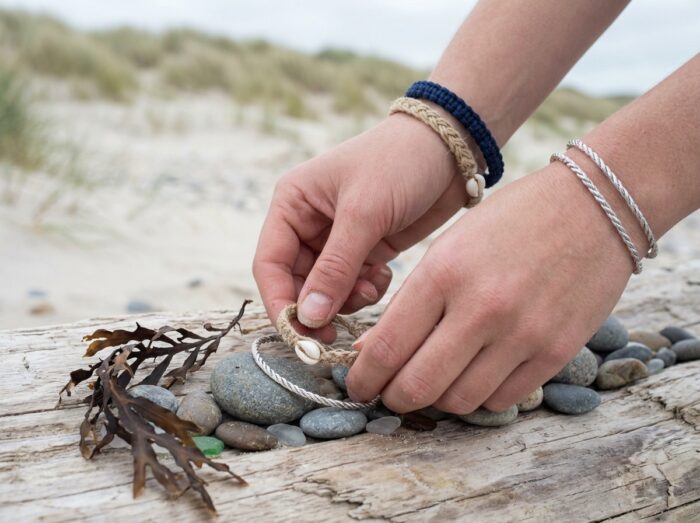
In practical terms, this means that clasps, links, and metal decorative elements must meet this threshold, even after months of exposure to sweat or saltwater. The mention “stainless steel” on a product sheet does not automatically guarantee compliance if the alloy used is of variable quality.
Concrete Checks Before Purchase
Several points deserve attention for a bracelet intended to be worn constantly:
- Look for an explicit mention of REACH compliance, not just “nickel-free” or “hypoallergenic,” terms that do not have a strict regulatory definition.
- Favor brands that specify the type of steel (316L for example) or indicate a PVD treatment for gold finishes.
- Check user feedback on durability: a marine cord bracelet may lose its elasticity or see its seams give way after a few months of intensive wear.
Personal Meaning of the Marine Lucky Charm Bracelet
The strength of a lucky charm relies less on a magical property than on the mental anchoring mechanism it triggers. Wearing a piece of jewelry chosen for its symbolism creates a physical reminder of an intention, a memory, or an emotional bond. The marine bracelet lends itself particularly well to this use because its symbols are polysemous.
An anchor can signify fidelity for one person, a love for travel for another, or simply the memory of a summer by the water. This plasticity of meaning explains why the same object works as a universal gift: the giver imbues it with intention, while the receiver projects their own onto it.
The cowrie shell, present in many marine bracelets, illustrates this layering of meanings well. Associated with prosperity in certain African and Asian cultures, with femininity in other traditions, it becomes on a Western wrist a simple reminder of the ocean, while retaining its symbolic charge for those who know it.
Thus, the marine bracelet brings together what many lucky charm enthusiasts seek: a discreet object, carrying a story older than its current form, and sufficiently open in its meaning to accompany very different moments in life. The only precaution that truly matters is not symbolic but material: to choose a bracelet whose materials can withstand daily contact with the skin without degrading.