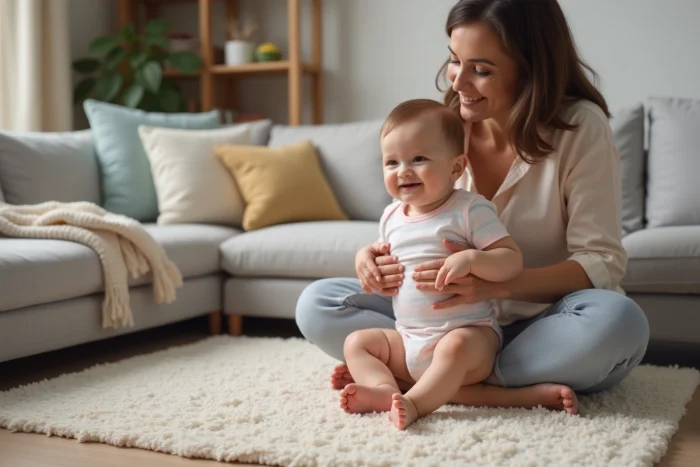
Some infants can sit up by five months, while others take until eight months to achieve this without support. Official recommendations warn against hastily placing the baby in a sitting position, but concerns persist regarding the differences in development among children.
Professionals agree on one point: the variability in motor development does not always indicate a problem. However, social or family pressure sometimes encourages the acceleration of a stage that depends on muscle strength, tone, and the maturation of the nervous system. Guidelines for supporting this development require precision and vigilance.
Understanding the natural rhythm of baby: when and how the sitting position appears
It is impossible to impose a single tempo on all babies. The natural rhythm of each child defies predictions and reminds us that the body progresses according to its own laws. Some sit up on their own as early as six months, while others prefer to take their time, first exploring the floor, on their back or stomach, before sitting up. The acquisition of the sitting position never happens by chance: it is part of a gradual journey, where the muscles of the neck, back, and abdomen strengthen step by step.
Look closely: motor development follows a progression that starts with head control in a prone position, moves through the first rollovers, arm supports, and gradually leads to sitting up. Trying to rush these stages risks disrupting the child’s bodily harmony. Forcing the sitting position before the child has acquired enough stability exposes them to falls, imbalances, or unnecessary tension.
The surrounding environment has every interest in providing a secure and stimulating space, without ever imposing a posture. It is better to prioritize free movement on a firm mat, allowing the child to experiment on their own, rather than stacking cushions and supports to speed up the process. If you want to learn more about Bella Maman, the recommendations emphasize a concrete approach: supporting the child without rushing the stages. Each progress finds its place, far from comparisons and the race for performance.
What signs indicate that baby is ready to sit up?
Before achieving independent sitting, the baby shows subtle but revealing signals of their physical maturity. Healthcare professionals observe several unmistakable indicators.
Here are the main signs to watch for to identify when the child is approaching the sitting position:
- Head control: If your child keeps their head upright without wobbling, whether in your arms or on the floor, they are reaching a crucial milestone. This autonomous control, often achieved before six months, marks the beginning of a new postural independence.
- Trunk stability: Lying on their back or stomach, they attempt to sit up, pivot, support themselves on their forearms, and engage their upper body. These repeated efforts demonstrate a developing muscular commitment.
- Support on hands: On their stomach, the child who firmly pushes up on their hands and lifts their chest shows that they have enough strength to consider verticality. This action actively prepares for sitting.
Taking the time to notice these stages helps to respect the child’s rhythm, without pushing too quickly. Sitting a baby up before they have the necessary stability can disrupt their development, create tension, or slow down their natural acquisitions. If doubts persist, or if progress seems particularly slow, the opinion of a healthcare professional remains the best ally. Supporting each key stage with care offers the child the chance to build their motor foundations on solid ground.
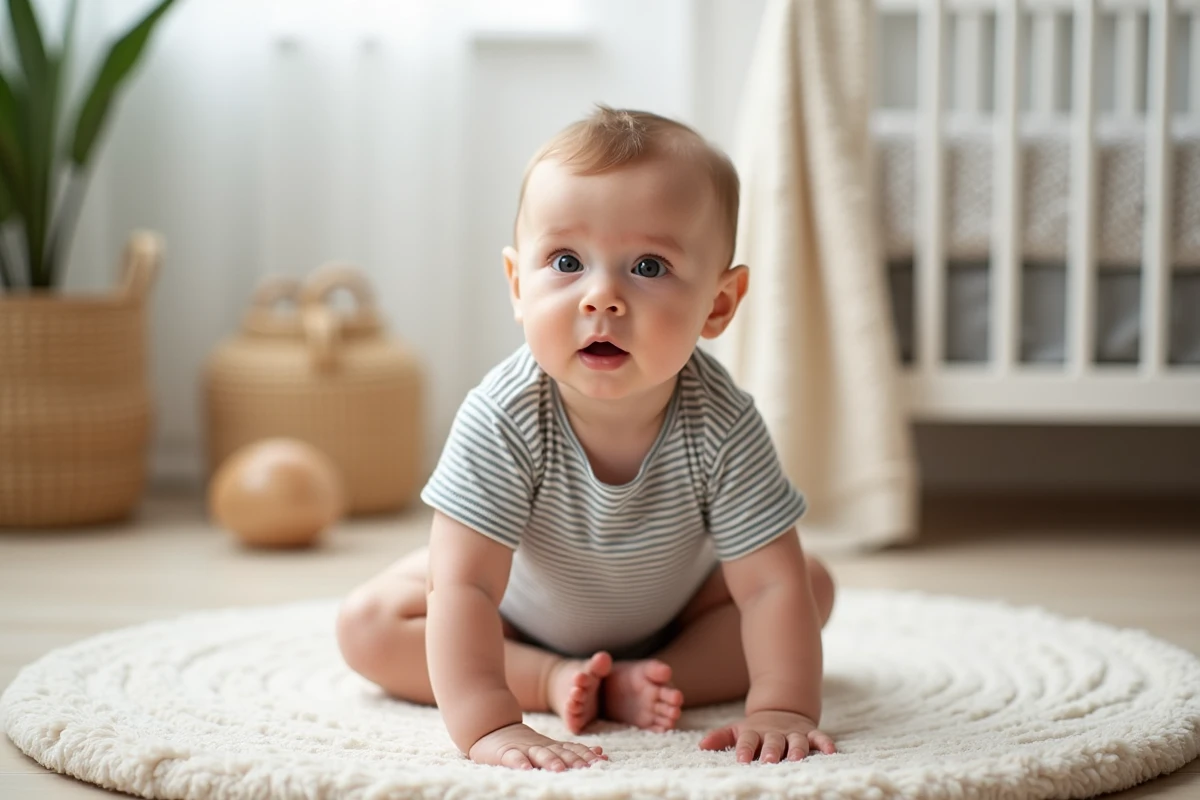
Concrete tips for safely guiding baby towards the sitting position
To support the child’s motor awakening, nothing replaces patient observation and unwavering trust in their abilities. Free movement proves to be the best ally: let the child explore, experiment, and find the posture that suits them. Sessions of floor play, on a firm yet comfortable mat, help strengthen the back, neck, and abdomen, thus preparing for sitting.
Several simple actions can enrich daily life and encourage progress:
- Provide a variety of toys placed at different heights around the child. This diversity encourages them to pivot, sit up, and reach out, developing both fine motor skills and coordination.
- Vary the postures: time on the stomach, then on the back. Each position engages different muscles. The stage of crawling, sometimes overlooked, proves valuable for strengthening stability and preparing for sustained sitting.
The secure environment must remain a priority: eliminate any dangerous or unstable objects around the play area. Avoid using equipment that artificially keeps the baby sitting, such as certain cushions, which hinder their freedom of movement. Focus on a supportive presence: sit on the floor with them, encourage them with your voice, gaze, and touch. This discreet companionship strengthens both confidence and the desire to explore.
Every day, dedicate a few minutes to these explorations, without ever trying to speed up the pace. Psychomotor development unfolds over time: moving forward in small steps, respecting signals, offers the child a safe experimental ground where emotional security and bodily freedom combine. The sitting position will establish itself naturally, as the result of a patient, shared journey.