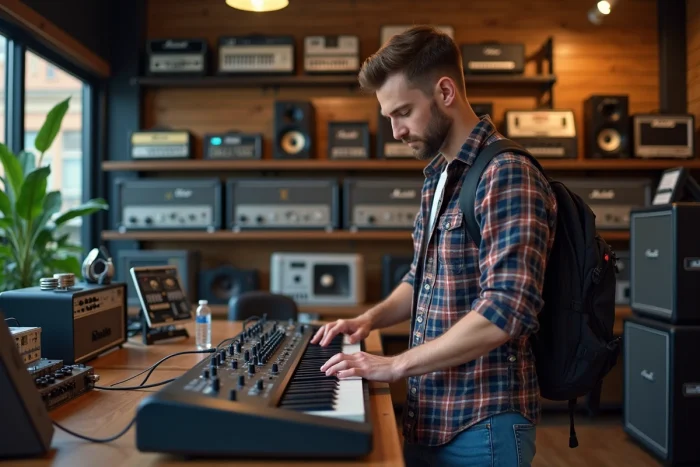
An oversized amplifier in an intimate setting generates more nuisances than benefits. Conversely, undersized equipment compromises the sound clarity of a large meeting, even with seasoned speakers.
The compatibility of the equipment with the venue, the type of event, and the audience does not follow any universal formula. Some equipment, although reputed to be versatile, proves ineffective outside its preferred domain. Technical mismatches persist, often due to a lack of understanding of the specificities unique to each use.
What are the essential equipment for successful sound reinforcement?
Successfully achieving the sound reinforcement of an event is not a matter of chance. Above all, choosing sound equipment that is coherent with the venue’s configuration and the desired atmosphere is the first step for a faithful sound broadcast. A solid audio system relies on the complementarity of several technical elements, whose synergy ensures homogeneous sound coverage.
Speakers remain the foundation of any installation. The ideal? Opt for models whose power truly matches the size of the room and the number of participants. To enhance depth, a subwoofer becomes essential during concerts or dance parties, where the bass must resonate without weakening. Conversely, conferences require clear vocal reproduction: a quality microphone, coupled with a high-performance mixing console, allows for adjusting each sound source and balancing levels.
A well-sized amplifier, or suitable sound packs, ensures clear broadcasting without saturation or distortion. Choosing rigorously reduces the risk of breakdowns and prevents technical surprises during the performance. To explore different configurations or deepen your choices, the Backline – All News page offers an overview of news and resources from the industry, benefiting from the expertise of backline.fr.
A thoughtful installation scheme, combined with suitable sound equipment, lays the foundation for a sound performance that meets expectations. Three axes to examine closely: power, quality, and flexibility of the audio system. This trio makes the difference when it comes time to choose your sound reinforcement and ensure the success of each event.
Adapting equipment choices according to the type of event: concert, wedding, conference…
Each type of event dictates its own technical rules. A concert, for example, requires equipment capable of delivering the necessary power: an audio system designed to cover the entire audience, speakers that do not falter, and a subwoofer ready to reproduce the full dynamics of low frequencies. For outdoor events, one must also consider the IP protection rating of the sound equipment, a guarantee of longevity against weather hazards.
For a wedding, flexibility takes precedence. Compact and easy-to-install sound packs are essential, whether for the evening’s entertainment or for speeches. The number of guests, the configuration, whether in a cozy room or outdoors, and the venue’s acoustics weigh on the choice. A wireless microphone can quickly become indispensable to give freedom to the speakers.
Conferences, on the other hand, aim for clarity. A dedicated mixing console, paired with precise microphones, allows for reproducing each speech without approximation. The format of the event, whether plenary sessions, workshops, or round tables, and the number of speakers guide the selection. For festivals or parties, the immersive experience is built through the arrangement of equipment and the balance of levels.
Here are the main criteria to keep in mind according to the type of event:
- Concert: power, coverage, robustness, adaptability to outdoor settings.
- Wedding: versatility, simplicity, compactness, ease of installation.
- Conference: intelligibility, voice management, system flexibility.
The sound equipment must always align with the reality of the venue, the format of the event, and the expected audience to ensure a controlled and faithful sound experience.
Practical tips for installing, using, and avoiding common mistakes when renting musical equipment
Preparing the installation to ensure reliability
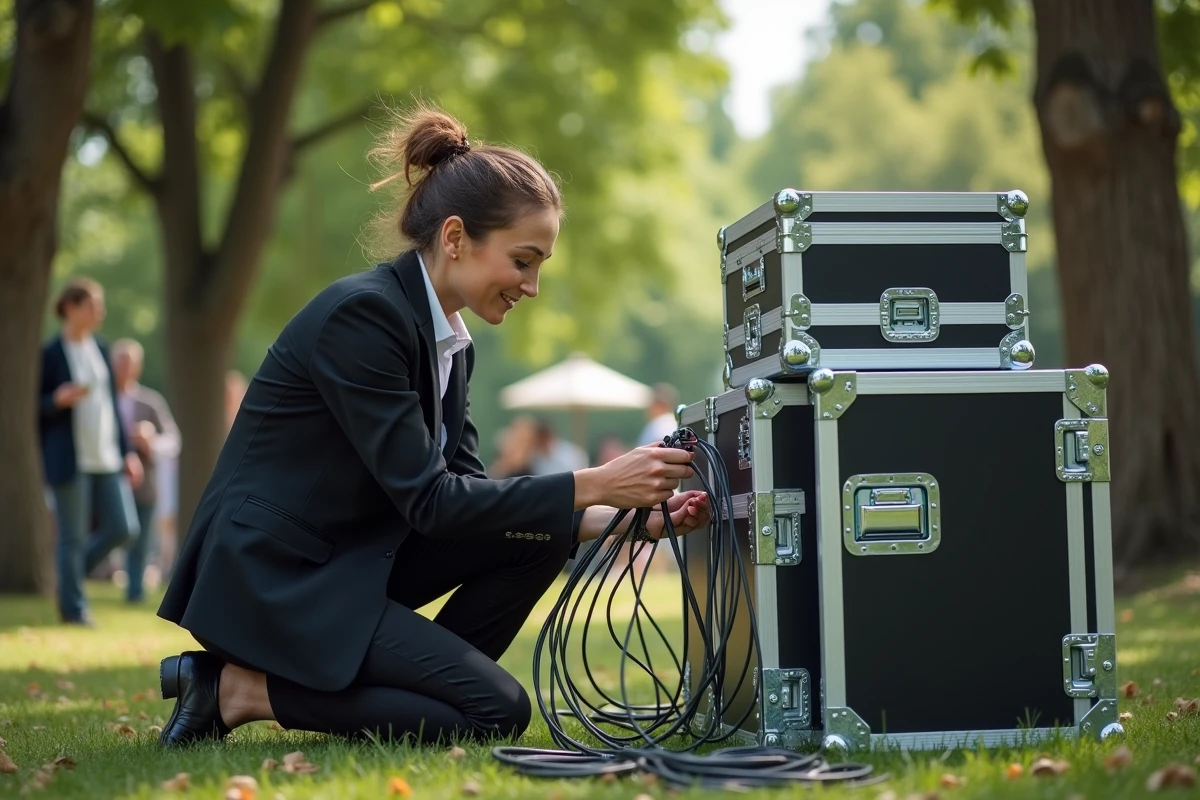
Installing rented sound equipment requires method and anticipation. Before any connection, check the checklist provided by the provider: cables, adapters, power supplies, general condition of the audiovisual equipment. Each speaker and microphone deserves an isolated test, in a quiet environment, to detect any unwanted noise or defects. Keep the mixing console away from any moisture source. The sound packs should rest on stable supports, away from walkways.
Usage: vigilance and flexibility
Adjust the volume of the amplifiers to the size of the event. A level that is too high distorts the acoustics, while a level that is too low deprives the performance of its impact. If a sound engineer or technician is present, rely on their expertise for adjustments and to avoid feedback. Favor wired microphones for fixed interventions, and reserve wireless models for movement on stage.
Avoiding the pitfalls of renting musical equipment
Renting musical equipment exposes you to certain risks: unsuitable cables, incompatible connectors, lack of solutions in case of breakdown. Demand technical assistance or personalized advice upon equipment delivery. Inquire about troubleshooting procedures in case of incidents. For major events, delivery and on-site installation by a professional secure the entire setup. Ultimately, the quality of the sound experience depends as much on the chosen sound equipment as on how it is implemented on the ground.
When the last note fades and the room returns to silence, the memory of a controlled sound, a just atmosphere remains. This is where the relevance of the equipment choice is truly measured, well beyond numbers and technical specifications.