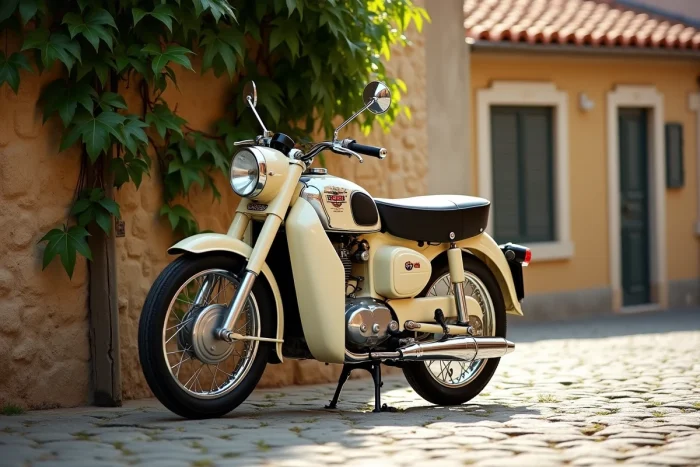
The Yamaha Chappy 125 and the Honda Dax 125 share a compact silhouette, raised handlebars, and a retro aura that attract the same vintage ride enthusiasts. But behind the common aesthetics, these two machines are based on very different technical and regulatory realities. This comparison focuses on their mechanical characteristics, homologation status, and usage costs to shed light on a choice often guided solely by nostalgia.
Honda Dax ST125 and Yamaha Chappy 125: Key Features Comparison
| Criteria | Honda Dax ST125 (new) | Yamaha Chappy 125 (used/swap) |
|---|---|---|
| New availability in France | Yes, official Honda network | No, older models or custom builds |
| Homologation | Euro 5 | Original homologation (50 cm³) or complex registration if engine swapped |
| Fuel Injection / Carburation | Electronic injection | Carburetor (2-stroke on vintage models) |
| ABS | Yes | No |
| Catalytic Converter | Yes | No |
| Spare Parts | Honda network, wide availability | Used market, rare parts |
| Future Technical Inspection | Compliant with recent standards | Risk of non-compliance (noise, emissions, braking) |
This table summarizes the fundamental gap between the two models: one is a current industrial product, the other a passionate project. To delve deeper into each criterion, check out this Chappy 125 and Honda Dax comparison.
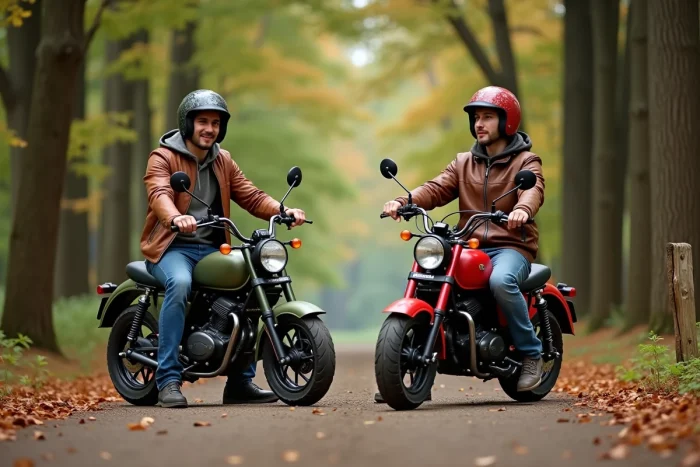
Homologation and Motorcycle Technical Inspection: The Real Divide Between Dax and Chappy
Most comparisons between vintage mini-motorcycles focus on style or riding pleasure. They overlook a structural point: the Yamaha Chappy no longer exists as a new homologated 125 cm³ on the European market. The models available are original Chappy 50 or 80, sometimes equipped with a 125 engine through a swap.
This transformation poses a concrete problem. Obtaining a registration certificate for a Chappy whose displacement has been modified requires going through the DREAL or an equivalent service, with variable fees and timelines. Insurance can also become complicated if the vehicle no longer matches its original technical specifications.
The Honda Dax ST125, relaunched in 2022 with a complete Euro 5 homologation, does not suffer from any of these constraints. Injection, ABS, catalytic converter: it ticks all the current regulatory boxes. With the scheduled introduction of motorcycle technical inspections in France, a modified Chappy will be more exposed to refusals than a modern Dax, particularly regarding noise, emissions, and braking measures.
Case of Low Emission Zones and Traffic Restrictions
Low emission zones (LEZ) are multiplying in French urban areas. A two-stroke engine without a catalytic converter, like that of the vintage Chappy, could eventually be banned from accessing certain urban areas. The Dax ST125, compliant with the most recent standards, is not subject to these restrictions.
Comfort and Road Behavior of the Dax 125 vs. Modified Chappy
On paper, the modern Honda Dax ST125 offers a significantly superior comfort for two compared to the Chappy. Its rear suspension, standard passenger footpegs, and frame designed for two people make it a mini-motorcycle usable by two over short distances. The Chappy, designed as an ultra-compact solo machine, lacks passenger ergonomics worthy of the name.
When riding alone, the difference is also noticeable. The Dax’s injection provides a smooth and consistent engine response, whereas the Chappy’s carburetor requires fine-tuning and more frequent maintenance. For leisurely vintage rides on departmental roads, both machines do the job. On a longer or hilly journey, the Dax gains the advantage with its engine flexibility and stability.
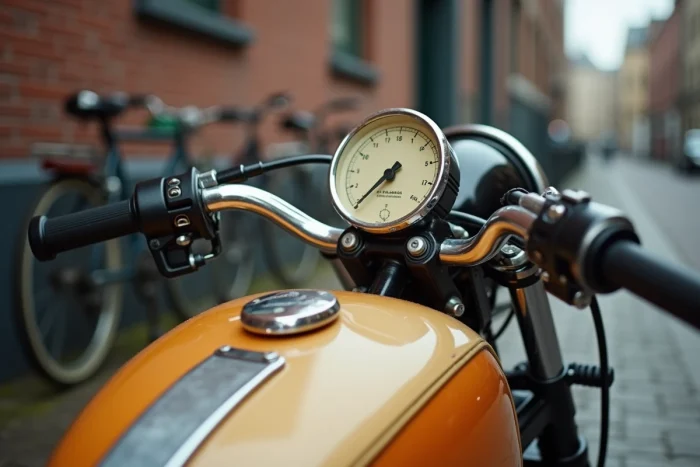
Usage Costs and Parts Availability: Yamaha Chappy vs. Honda Dax
The purchase price of a Chappy 125 (or a modified Chappy) may seem attractive compared to the catalog price of the new Dax ST125. This reasoning overlooks several expense items that can accumulate quickly:
- The spare parts for the Yamaha Chappy have become rare. The model has not been produced for decades, and stocks are depleting on the used market or through specialized sellers, with sometimes long delays and high prices for parts in good condition.
- A swap to a 125 cm³ engine requires the intervention of an experienced mechanic, adaptations to the chassis, and often the replacement of peripheral components (exhaust, wiring, transmission).
- Maintaining a two-stroke carbureted engine is more frequent than for a four-stroke single-cylinder with injection: carb adjustments, replacing rings, cleaning the exhaust.
In contrast, the Honda Dax benefits from the Honda France network: parts available at dealerships, standardized servicing, manufacturer warranty on new models. The total cost of ownership for the Dax remains predictable, while that of the Chappy heavily depends on the condition of the found model and the complexity of the modifications made.
Chappy 125 or Dax 125: Which Vintage Rider Profile?
The modified Chappy appeals to a specific profile: someone who enjoys tinkering, has a network of contacts to source vintage Yamaha parts, and accepts the administrative challenges associated with a non-standard vehicle. The pleasure is real, but it requires an investment of time as well as money.
The Honda Dax ST125 suits those who want to ride vintage without compromising on reliability or compliance. Its distribution network, homologation, and comfort make it the most rational machine for regular rides.
The deciding factor that separates these two models is neither style nor power: it is the ease of riding legally and without mechanical worries over time. The Dax ST125 clearly wins in this regard.