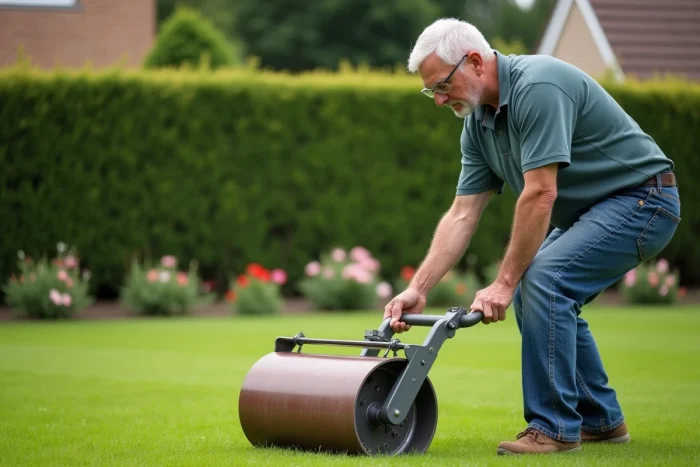
A 100 kg lawn roller does not guarantee a perfect lawn: such weight can break roots that haven’t asked for that much pressure. Conversely, rolling with a feather means missing the main goal: ensuring a stable and uniform surface without damaging the young shoots. In private gardens, it is generally recommended to use 30 to 50 kg for proper maintenance. But add sand or water, and the tool suddenly changes size: the question of weight is not as simple as it seems.
Why the weight of the lawn roller can transform the appearance of your lawn
Nothing is more decisive than the choice of lawn roller. A measured pass, tailored to your terrain, ensures a uniform, dense, and solid carpet. Here, pressure matters: too little, and irregularities persist; too much, and the grass suffocates. It’s a balance to find, and it really depends on the nature of the soil, the time of year, and the size of your area.
For the vast majority of family gardens, aiming for a roller between 30 and 40 kg offers the best compromise between efficiency and maneuverability. This weight prevents forcing while seriously leveling the lawn without causing damage. If you have a perfectionist spirit or a large area to cover, models weighing 60 to 80 kg are appealing for their professional finish, provided the grass can withstand the pressure without getting damaged. Many homeowners opt for fillable rollers: when empty, they are lightweight and easy to store, and can be adjusted with water or sand up to 70 kg depending on the season or needs.
The essential point: avoid using the roller on waterlogged, dry, or frozen ground, as this is the best way to disrupt rooting or crumble the surface. To choose with confidence, you can also consult the optimal weight of a lawn roller and cross-reference recommendations based on your own plot.
Every soil has its roller: how to adjust the weight to your situation
Not all terrains or contexts impose the same recipe. Clay soil? You will often need to opt for a roller of at least 50 to 60 kg to smooth deeply. Sandy or very light soil? Go down to 30 to 40 kg to avoid crushing the vitality of young roots.
Depending on the size of the area, the width of the roller changes the game: for a lawn of less than 100 m², 45 to 60 cm is sufficient, and 30 to 40 kg can be handled effortlessly. If the lawn is large, widening to 98 cm allows you to complete the work quickly (the 30-33 cm cylinder remains ideal for stability and handling).
The objectives also differ: for a freshly seeded carpet or freshly laid rolled grass, prioritize gentleness. An accessory roller or a fillable model is necessary to avoid damaging the young cover. On already well-rooted soil, it is possible to switch to a more robust roller, or even add the aerator function to stimulate the lawn deeply.
Here’s what to keep in mind according to terrain configurations or usage:
- A clayey terrain will generally support a roller between 50 and 60 kg for marked flatness.
- On lighter soils, prefer to stay within the 30-40 kg range to maintain root vitality.
- For a newly grassed area, gradually adjust the weight of the roller according to recovery and densification.
- Large garden? Opt for a generous width (up to 98 cm) to move quickly without multiplying passes.
Keeping your roller effective and your lawn perfect: practical methods throughout the seasons
The key is consistency. The ideal times for rolling: in the spring just after the first mowing, and in the autumn just after the last cut of the year. Two to three controlled interventions are enough to keep the lawn dense.
Working on slightly moist soil yields better results and protects your seeds or young blades. For a uniform finish, feel free to cross your paths. If the soil is loose, load moderately; on firm ground, it is permissible to increase the weight for a more “professional” finish.
After use, thoroughly clean the cylinder to remove any soil residues. Store it dry in the garage: simple but effective. An additional step for fillable rollers: empty them in the off-season to avoid freezing and unpleasant surprises.
Caring for the soil is also crucial. Applied weeding, meticulous leveling, and, if possible, a supplement of topsoil or a compost addition will homogenize the structure before rolling. After laying natural rolled grass, water daily for the first three weeks. Add fertilizer four to six weeks later, then every three months to keep that vibrant and lush green.
In the end, the mark of the roller in the soil tells not only the method: it paints the portrait of an attentive, patient, and demanding gardener. Under your steps, the lawn takes shape, and the demand pays off in every blade that rises.